Evening Arrival and the Quiet First Loop
Landing after dark often feels like the trip already failed before it started. Kitchens are closed, the map looks farther than your legs want to go, and a speech about a wasted day starts writing itself. This note is about ending that speech early: claim the door, walk one lit loop, and stop before the night asks for more than you have left.
Why evening arrivals feel like failure
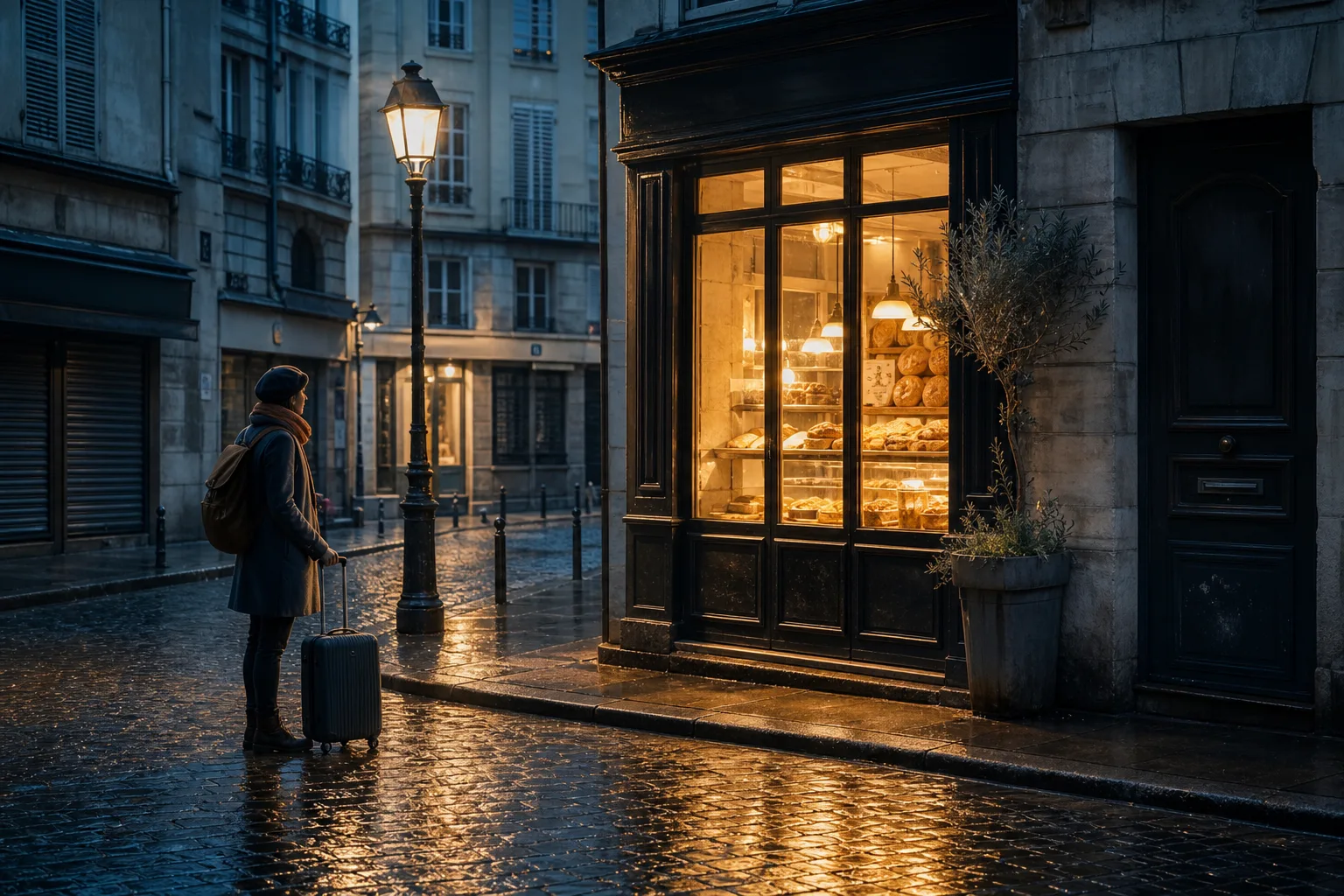
Morning arrivals get unused light. Midday arrivals get open desks and long queues. Evening arrivals get half of both and the leftover energy of a long transfer. The street looks different under lamps than it did in the photos you saved. A shop you counted on is shuttered. The kitchen that sounded reliable online stopped serving an hour earlier than you hoped.
None of that means the day is lost. It means the day has a different job. The job is not to prove that you can still “do the trip properly.” The job is to arrive in a room you can find again, with water, a short sense of the block, and enough rest that tomorrow does not start in fog.
People argue with themselves at this hour because they confuse orientation with achievement. Orientation is small: a door, a corner, a lit shop, a slope you can name without a screen. Achievement is the distant viewpoint you promised yourself on the plane. Mixing them up is how evening arrivals turn into rushed walks and empty returns.
Claim the door before you claim the neighborhood
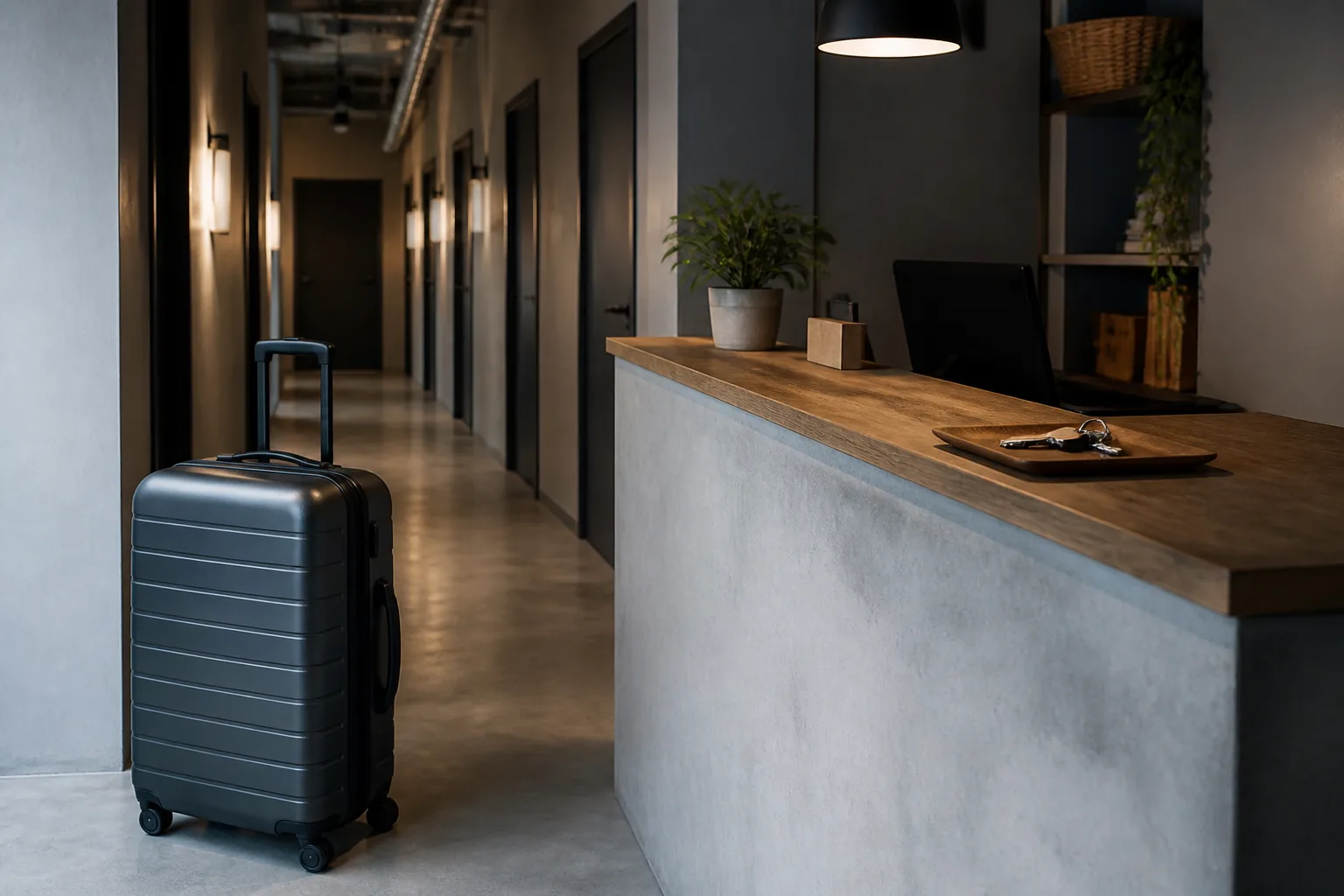
The first move is still the same as any other arrival window: bags down, key confirmed, a place to sit. Do this before you invent a scenic detour. After dark, a detour with luggage is not exploration. It is unpaid labor on streets you cannot yet read.
- Reach the address you were given and confirm the entry method while you still have signal.
- Put bags inside or in a secure hold before you walk farther than one corner.
- Drink water and sit for a few minutes without opening a long list of sights.
- Write one sentence about what tomorrow’s first walk will be — not tonight’s.
If the desk is closed, use the backup you prepared: a lockbox code, a host message, a late-key plan. If none of that works, solve the door before you solve dinner. Hunger is real, but a meal you cannot find your way back from is worse than a simple snack near a lit corner.
An early night after a late transfer is not a failed start. It is how the second morning begins with a street you already recognize.
The quiet first loop
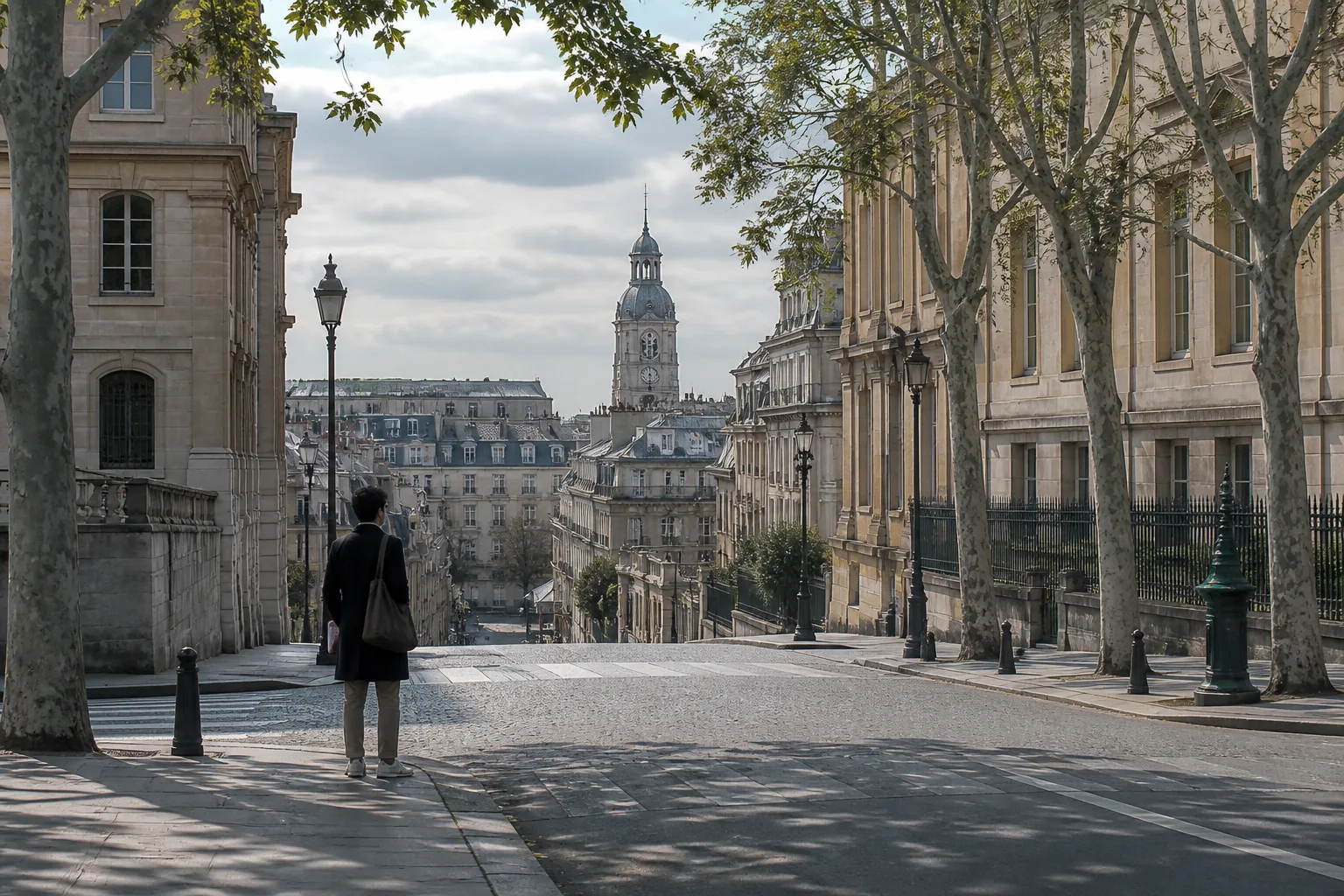
Once bags are down, keep the walk smaller than pride wants. Stay close enough that you can still find the door without relying on a perfect signal. Look for three things only: water or a bottle shop that is still open, something edible that does not need a reservation, and one landmark you can point back to — a clock, a tree, a crossing sound, a bakery window that stays lit later than the rest.
- Choose streets with people still moving, not empty service lanes that look short on a map.
- Turn around once while you can still see your building or a clear marker near it.
- Notice where the light drops and where it holds; that map matters more after dark.
- Avoid private courtyards and residential doorways that feel convenient but are not yours.
Going farther on the first evening mostly produces a tired return. The loop is not a tour. It is a rehearsal for tomorrow’s larger walk, done at a scale your body can keep.
What to leave for daylight
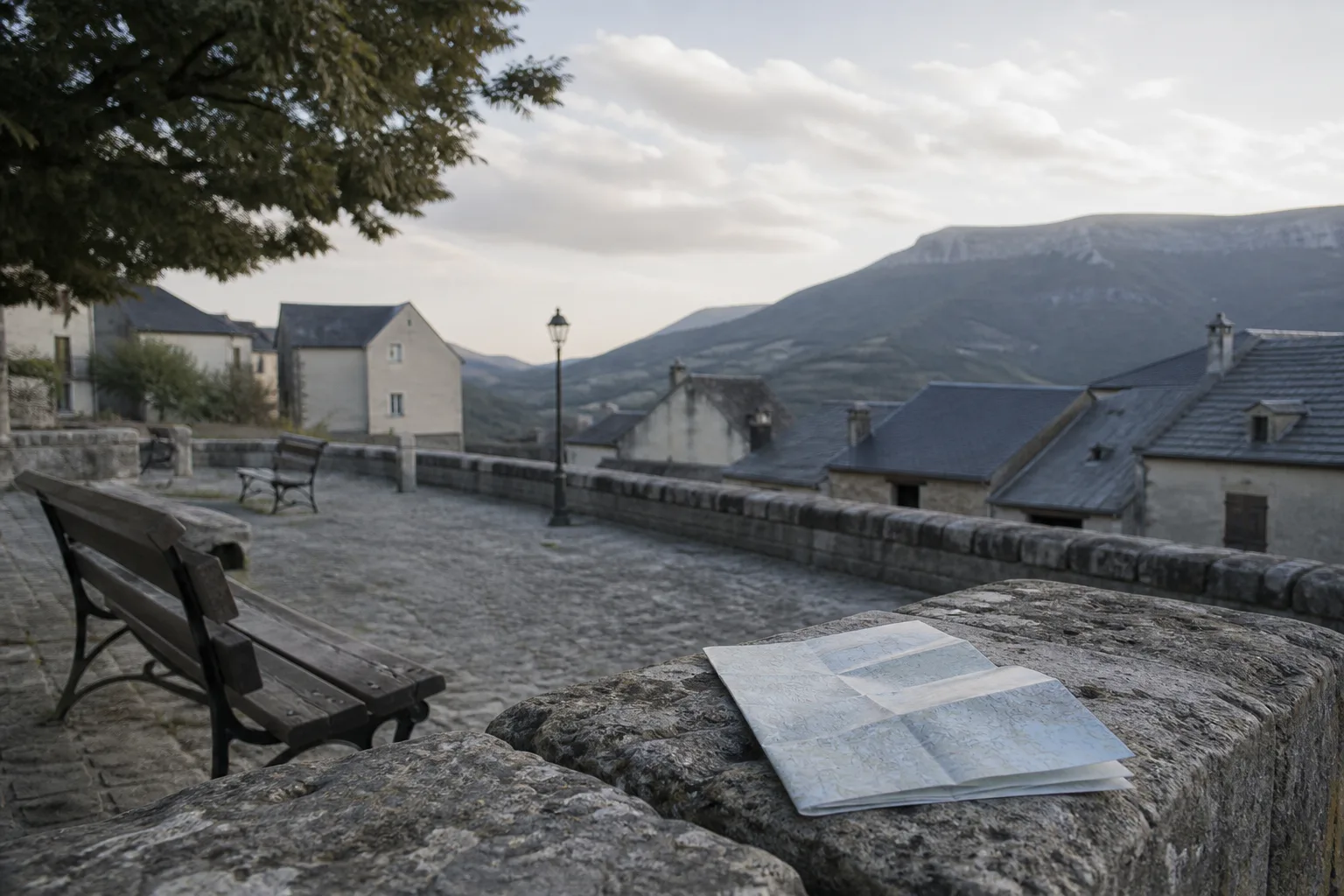
The ridge, the distant market, the long transit to a famous square — leave them. They will still be there when you know how long the walk home takes. Tonight, protect the second morning. Lay out clothes, note the opening hours you actually saw, and stop negotiating with yourself about “using” the day.
If you travel with others, agree on the small loop out loud before you leave the room. Shared evenings fail when one person still wants a showcase and another needs rest. Name the limit: one corner, one snack, back. That sentence saves more trips than any denser itinerary written on the plane.
Close the evening on purpose
Ending early is a method, not a weakness. Write down one cue from the loop so tomorrow starts with memory instead of a blank map. Charge what needs charging. Drink more water than you think you need. Sleep. The first day did its work if you can find the door again and you are not arguing about a postcard you never owed the night.
When people ask us to consult on evening arrivals, this is the frame we use: transfer, door, lit loop, stop. The rest of the trip can expand from a street that already makes sense. That is a calmer start than a long walk into dark you cannot yet name.