Reading a Neighborhood Without a Phone
A phone can open a map at every corner and still leave you lost when the signal drops. Orientation that lasts is built from a few cues you can keep with your eyes closed: how the street falls, where light holds, and which crossing you will hear again after dark.
Why constant map checks erase the place
Checking the screen at every turn feels careful. In practice it trains you to notice arrows instead of the street. When battery or signal fails, the arrows vanish and the neighborhood has no leftover memory. The goal of a first loop is not to never use a phone. It is to leave with two or three cues that still work when the phone is in your pocket.
People who already travel often do this without naming it. They glance once, then look up. Newcomers often keep the screen open because uncertainty feels safer when it is glowing. That habit costs the one skill the first day should build: being able to point back to the door without a search bar.
Cues worth keeping on a short loop
Choose a small set and practice them on purpose. You do not need a dense inventory of landmarks. You need a few that survive dusk and a tired return.
- Slope: whether the street rises or falls toward your door.
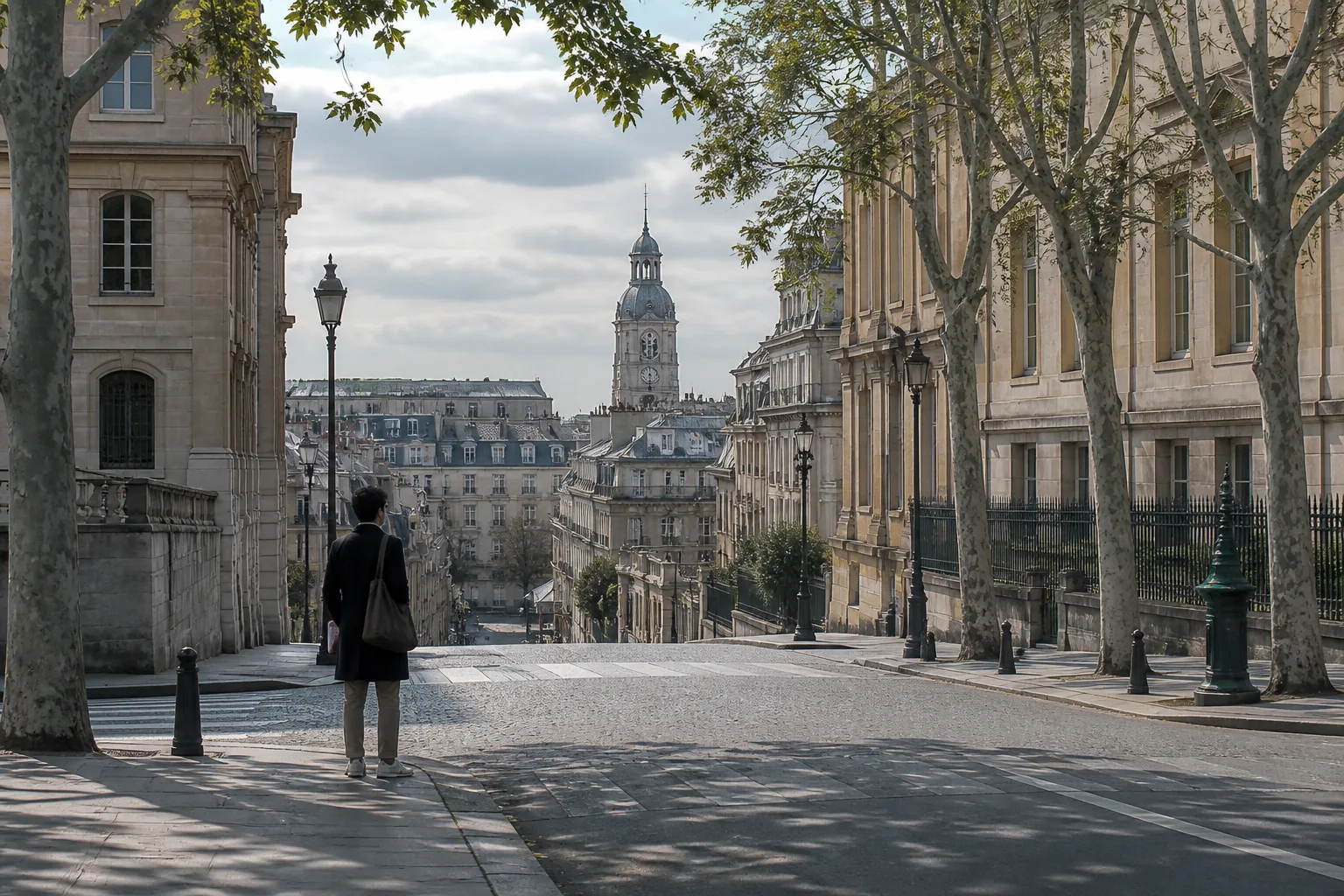
- Clock or tower: one tall marker you can see from more than one corner.
- Crossing sound: a light, a tram bell, traffic rhythm you will recognize later.
- Lit corner: a bakery, pharmacy, or lamp that stays on after nearby shutters close.
- Tree or planter: something living that marks a turn without needing a street name.
Say them out loud once while you walk. Naming is how the cue sticks. A silent glance at a slope is easy to forget; “downhill to the clock, then left at the lit bakery” is harder to lose.
Orientation is not a continuous stream of blue dots. It is a short list of things you can still find when the screen goes dark.
How to practice on the first loop
- Walk with bags already down so your hands and attention are free.
- Pick three cues before you leave the door; do not collect more than you can repeat.
- Turn around halfway and name the path back without opening the map.
- Only open the phone if you are truly stuck — then put it away again after one correction.
Stay on streets with other people when you can. Empty service lanes look efficient and fail after dark. Respect residential doorways; they are not shortcuts for your rehearsal. The loop is small on purpose so the cues stay attached to a place you will use again tomorrow.
What to write down afterward
One short note is enough: the three cues in order, plus anything that closed earlier than you expected. That note is for the second morning, when you expand the walk. It is also for anyone traveling with you who did not walk the loop. Shared orientation beats four people staring at four phones on the same corner.
When we consult on first-day routes, this is the literacy we teach before longer distances. Read the block with your feet and your eyes. Keep the phone as a backup, not as the only map you own.